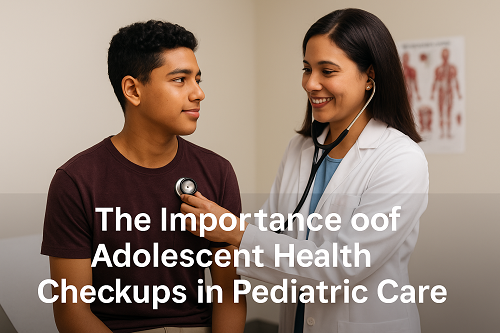

Adolescent Health Checkups
Adolescent Health Checkups are comprehensive medical evaluations tailored to the unique physical, emotional, and developmental needs of teenagers (typically ages 10–19). These checkups help monitor growth, puberty progression, mental well-being, and lifestyle habits during this critical transition from childhood to adulthood.
The service includes physical exams, screening for common adolescent health concerns (such as acne, anemia, obesity, and menstrual irregularities), immunization updates, and confidential counseling on topics like nutrition, substance use, peer pressure, body image, emotional stress, and sexual health. It also offers a safe space for teens to discuss personal concerns privately with a healthcare provider.
These regular checkups ensure early detection of health issues, reinforce positive behaviors, and promote long-term well-being during adolescence.
Symptoms of Newborn Care & Consultation
- Sudden Weight Gain or Loss: Unexplained changes in weight may signal hormonal imbalances, disordered eating, or underlying illness.
- Irregular or Painful Menstrual Cycles (for females): Irregularity, severe cramps, missed periods, or early/late onset of menstruation.
- Mood Swings or Behavioral Changes: Persistent sadness, irritability, withdrawal, anxiety, or aggression.
- Decline in Academic Performance or Concentration: Could point to stress, sleep issues, attention deficit, or emotional challenges.
- Fatigue or Low Energy: May be caused by anemia, poor diet, hormonal issues, or depression.
- Acne or Skin Problems: Persistent or severe acne, eczema, or skin infections that impact self-esteem.
Popular Questions
An adolescent health checkup is a comprehensive medical evaluation designed to monitor a teenager's physical, emotional, and developmental well-being. It covers everything from growth and puberty to mental health, nutrition, and lifestyle counseling.
Regular adolescent checkups are recommended from ages 10 to 19. Annual visits help track changes and address emerging health or behavioral concerns early.
The pediatrician or adolescent specialist will typically assess:
- Height, weight, and BMI
- Puberty and hormonal development
- Vision and hearing
- Mental and emotional health
- Eating and sleep habits
- Sexual health (if applicable)
- Skin issues (acne, rashes, etc.)
- Immunization status
Yes. Doctors encourage open conversations in a confidential setting, especially for topics like mental health, sexuality, substance use, and peer pressure. Parents may be asked to step out briefly during part of the visit.
Adolescents go through rapid physical and emotional changes. Regular checkups can detect hidden concerns like anemia, eating disorders, depression, or growth issues and promote healthy habits before problems develop.
Absolutely. Adolescent checkups often include screening for stress, anxiety, depression, and learning challenges. The doctor can offer support, counseling, or referrals if needed.
Yes, if appropriate. Teens may be counseled on puberty changes, menstrual health, personal hygiene, safe practices, and reproductive health, depending on their age and comfort.
Yes. Vaccines like HPV, Tdap, MMR boosters, and influenza are commonly updated during teen checkups, depending on age and vaccination history.
That’s normal. Doctors are trained to communicate with teens in a nonjudgmental and approachable manner to build trust. Over time, most adolescents open up when given privacy and respect
Let them know it’s a routine visit and reassure them it’s a safe space to discuss anything. Encourage them to write down any questions or concerns beforehand.